Salt & sun5 min
Sargassum, honestly
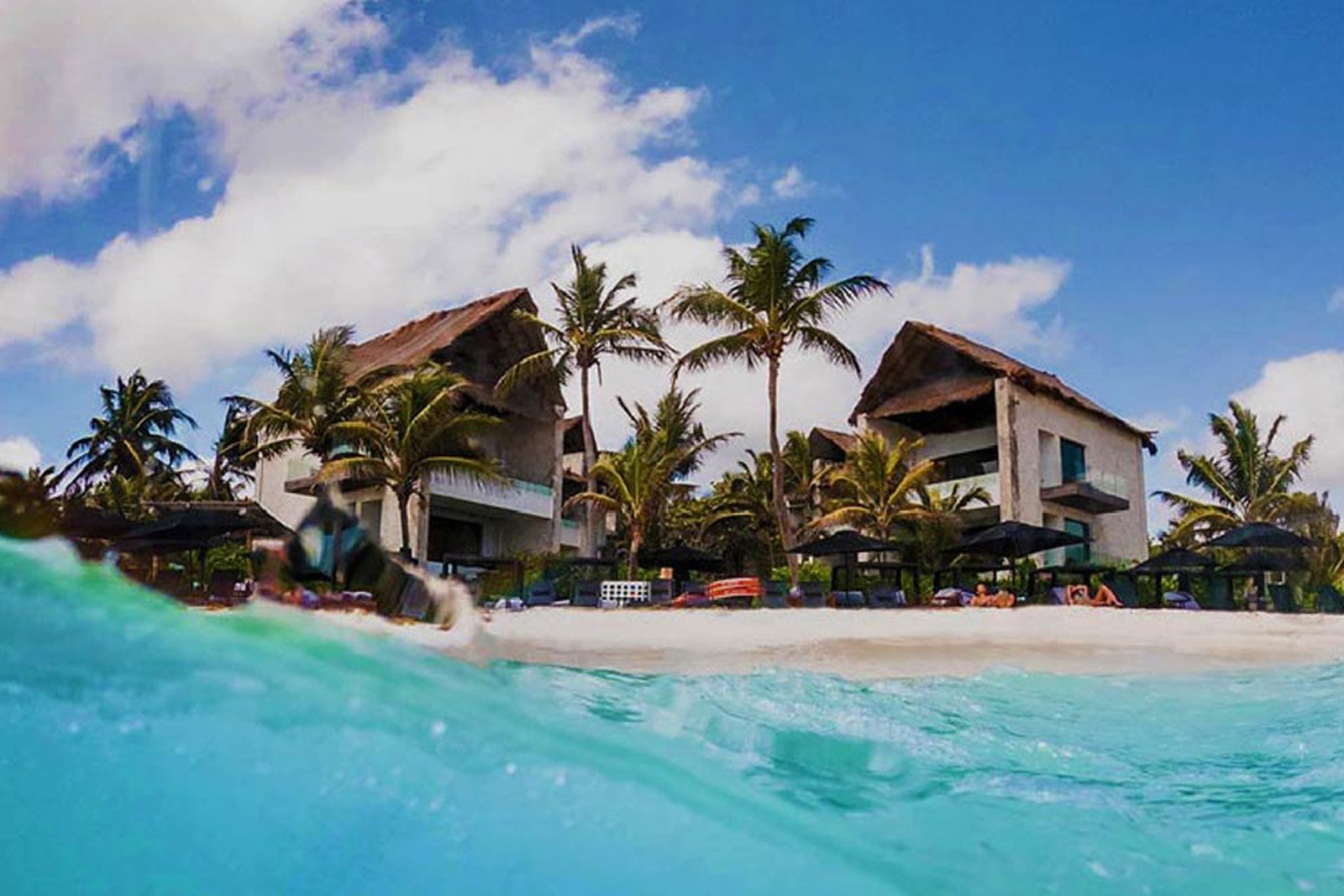
The question we get asked most, answered the way we'd answer a friend: what it is, when it comes and which months we would actually pick.
Read the story→
 The journal
Everything we'd tell you over a coffee at the bar, if you asked — the sea, the kitchen, the jungle, and the hours in between.
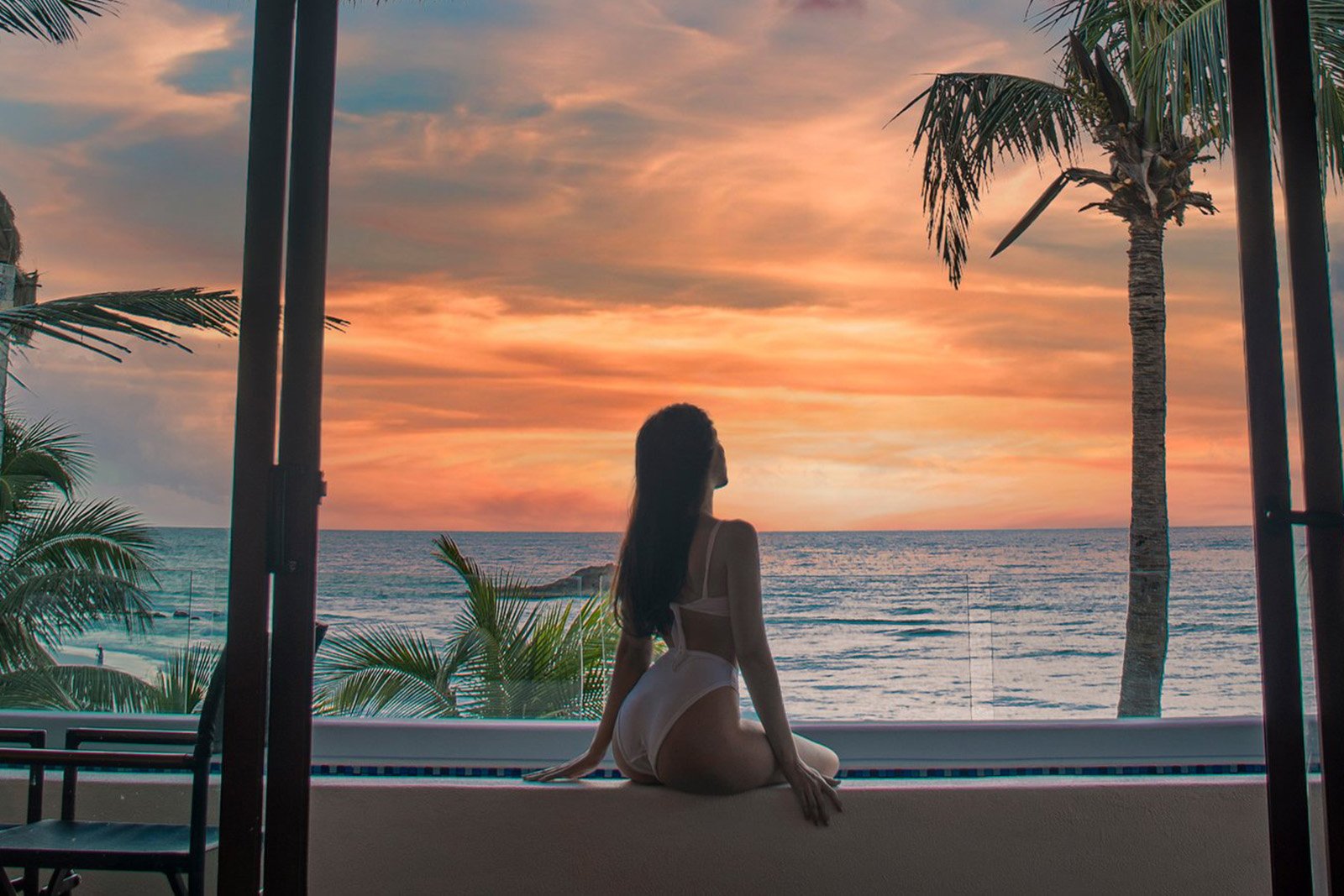
Nobody books a room for the twenty minutes before sunrise. Our night team thinks that's the part worth keeping.
Not by category. Nobody has ever woken up in the mood for “lifestyle”.
The question we get asked most, answered the way we'd answer a friend: what it is, when it comes and which months we would actually pick.
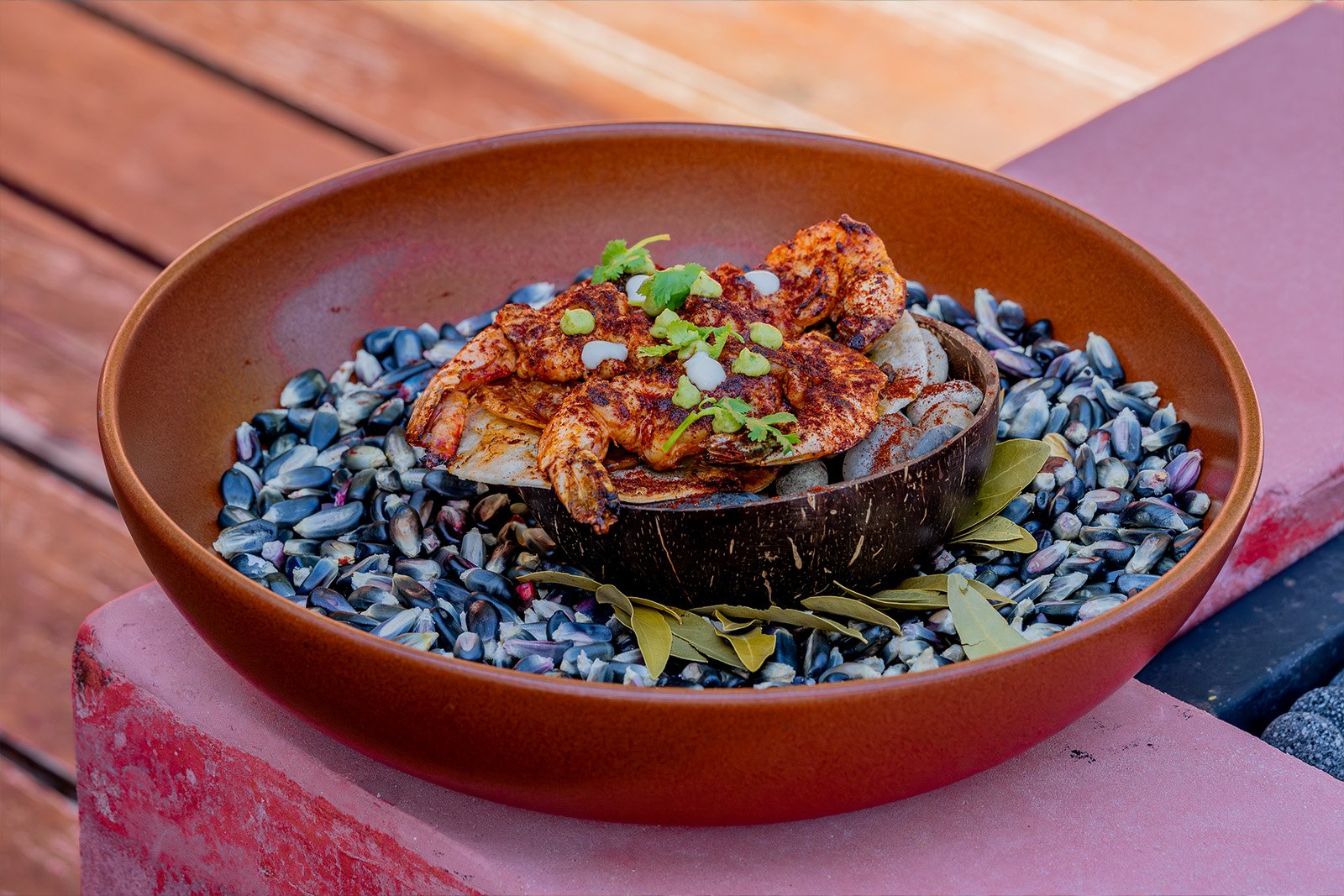
Chef Olga Mendoza on why the darkest dish on the menu is also the simplest — and what she buys before she decides what to cook.
Four cenotes within an hour of the hotel, ranked not by beauty but by how quiet they are at nine in the morning.
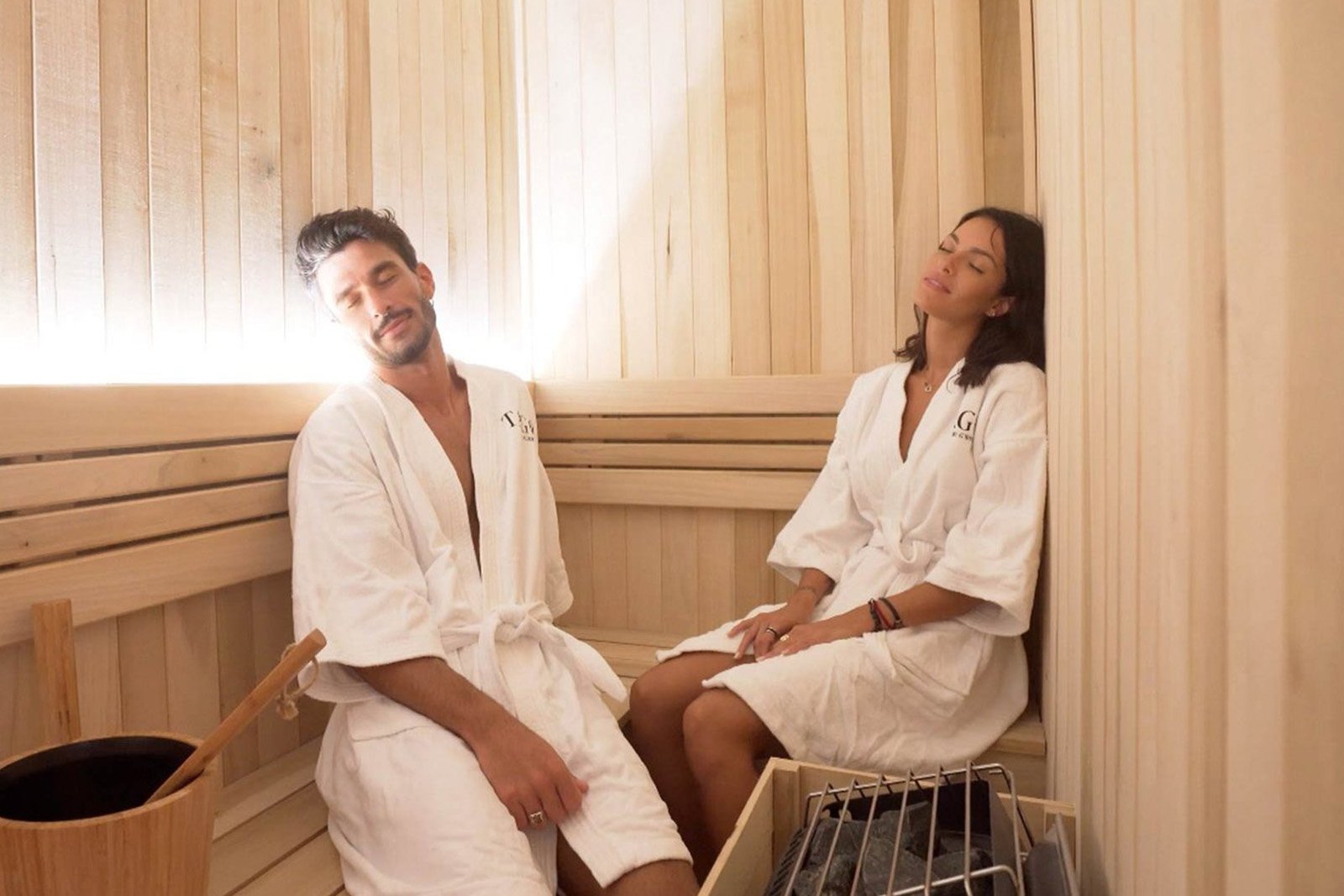
An afternoon built backwards from the temazcal. Three hours, no phone, and permission to fall asleep in the middle of it.
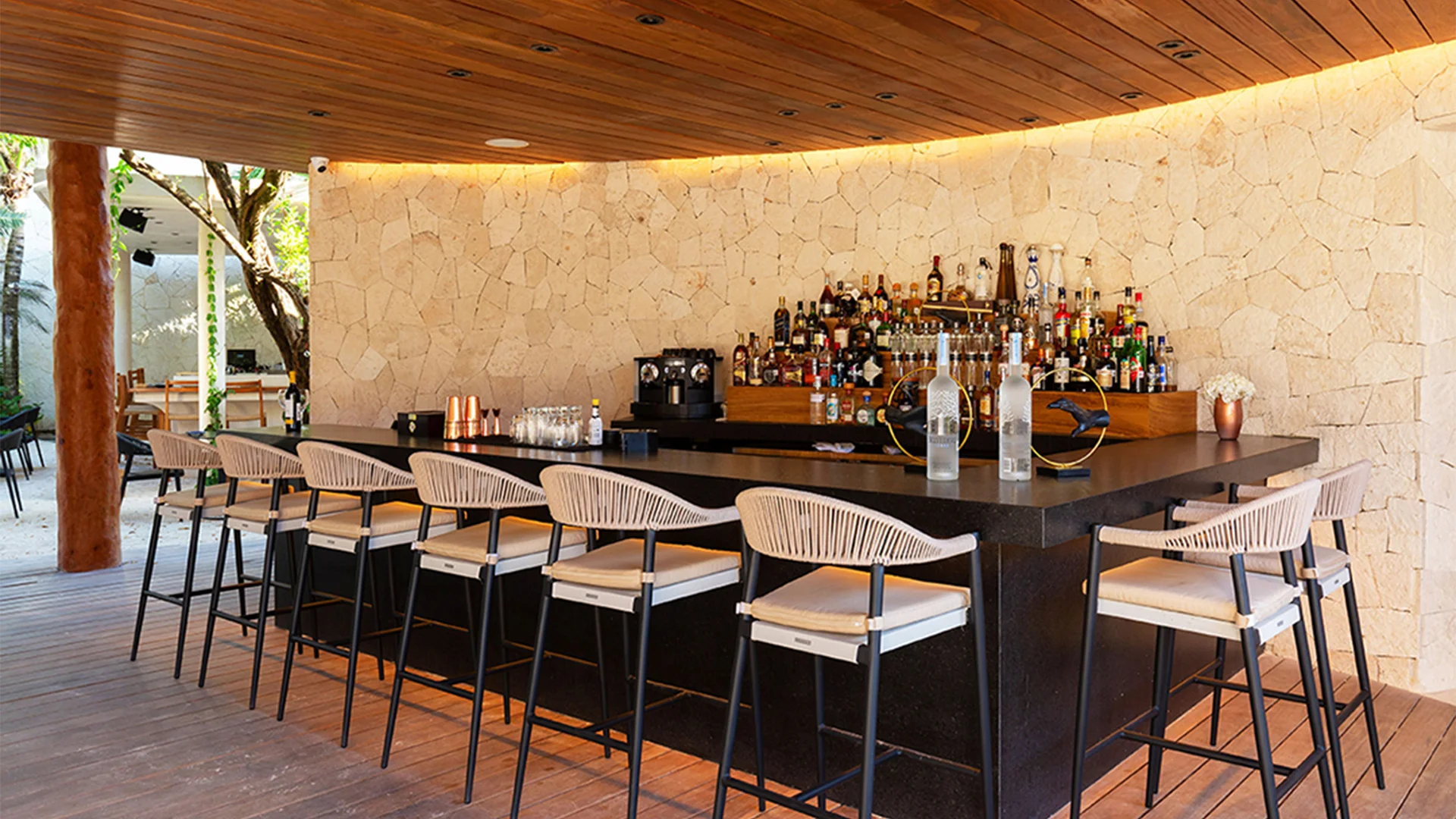
You don't need to know anything about mezcal to enjoy it. Our bar team explains what is in the bottle in about four sentences.
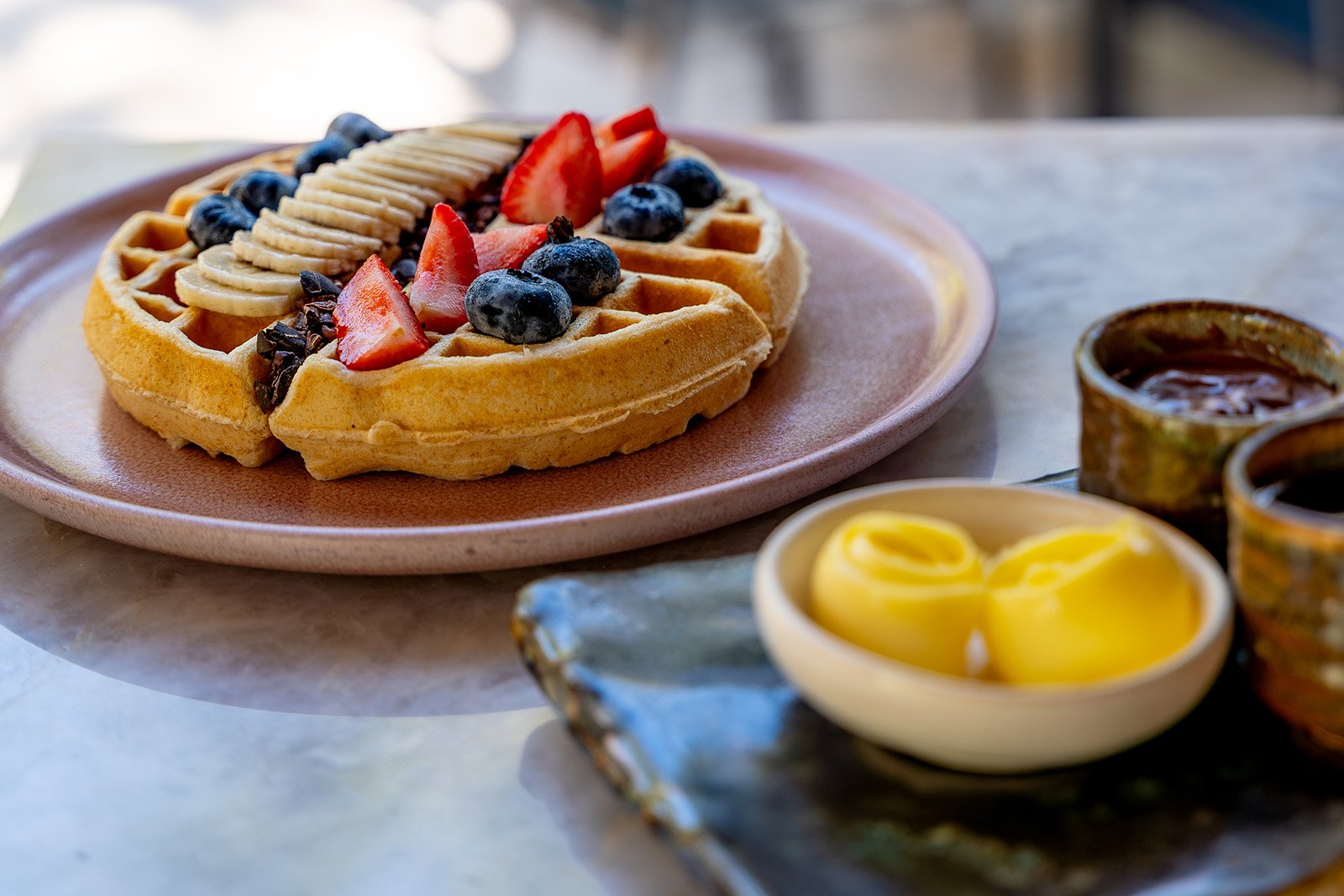
We stopped putting a closing time on breakfast. Here is what happened to the mornings after that.
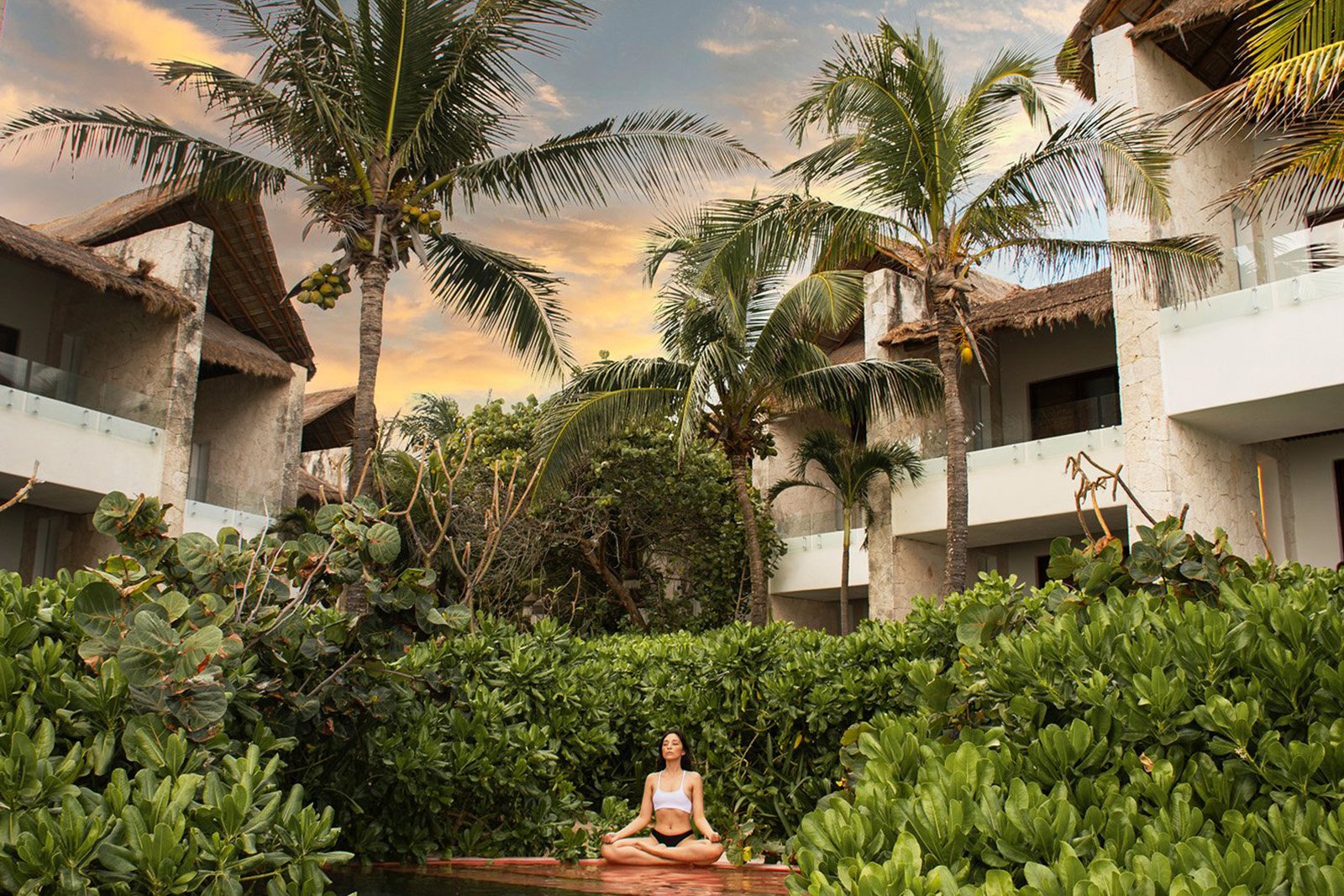
You will not be the most flexible person in the garden. Nobody is watching. That is rather the point.
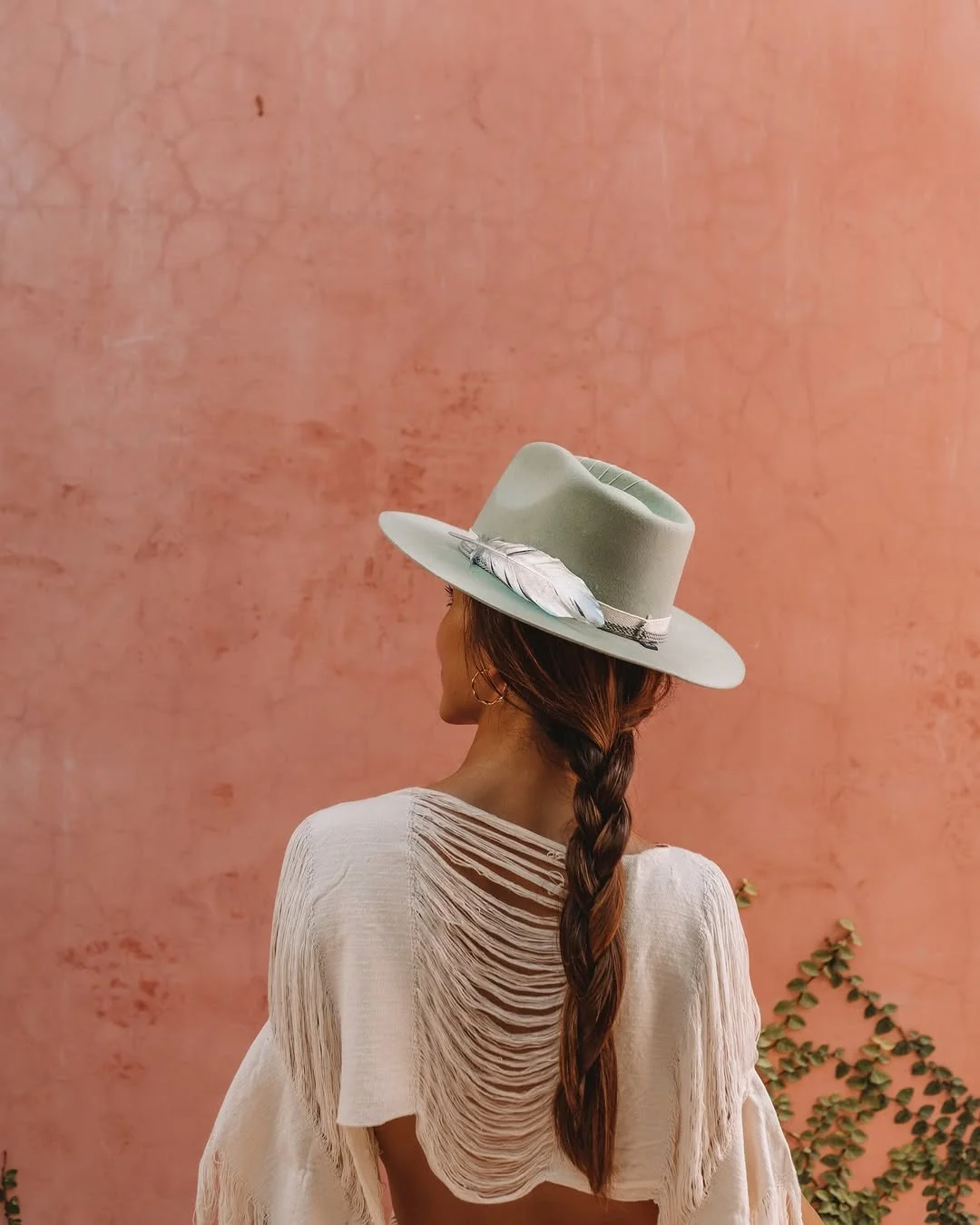
A short list from the people who unpack the suitcases. It includes the three things almost everyone forgets.
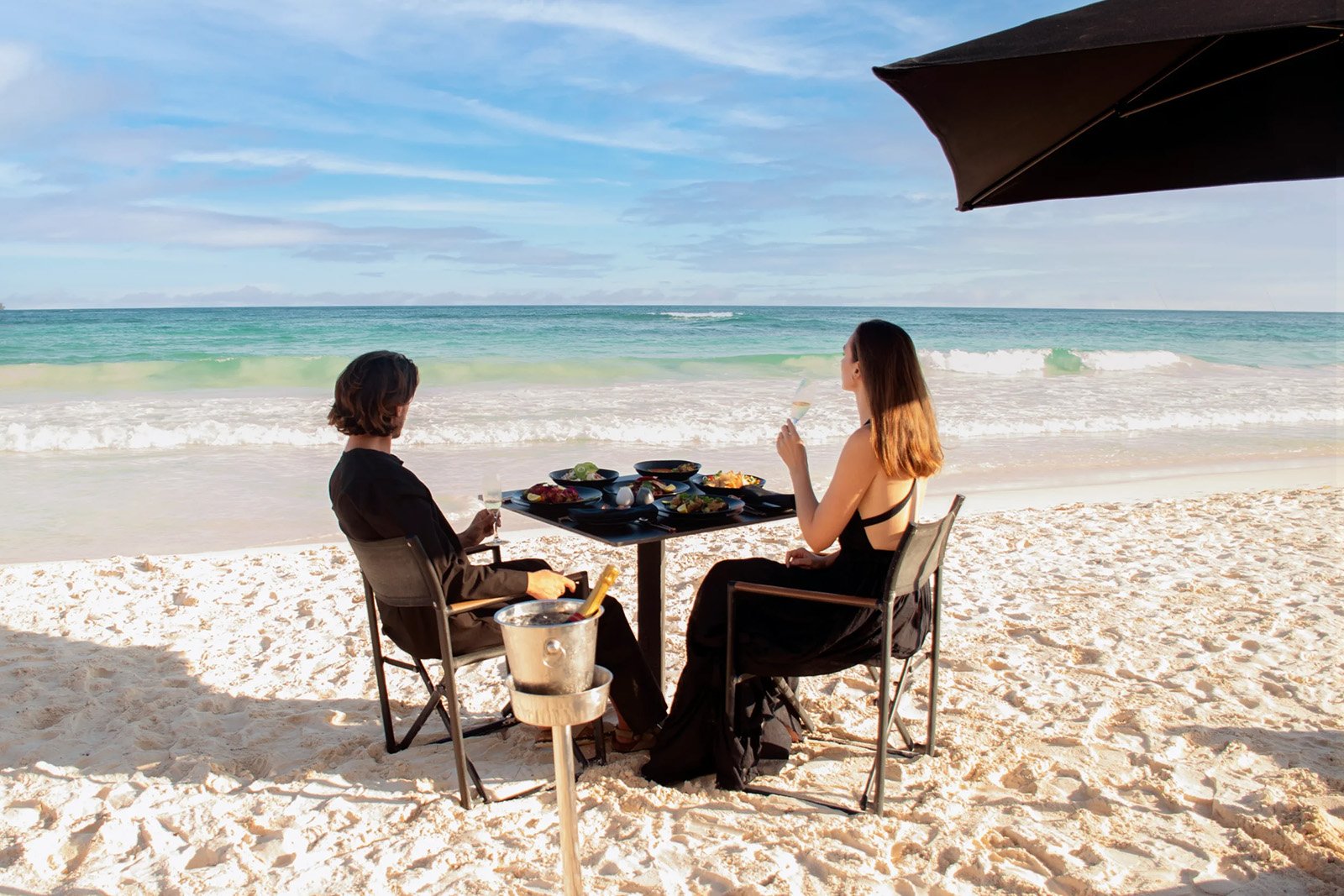
How a private table on the beach actually works: the timing, the wind, and why we ask you to choose the menu two days ahead.
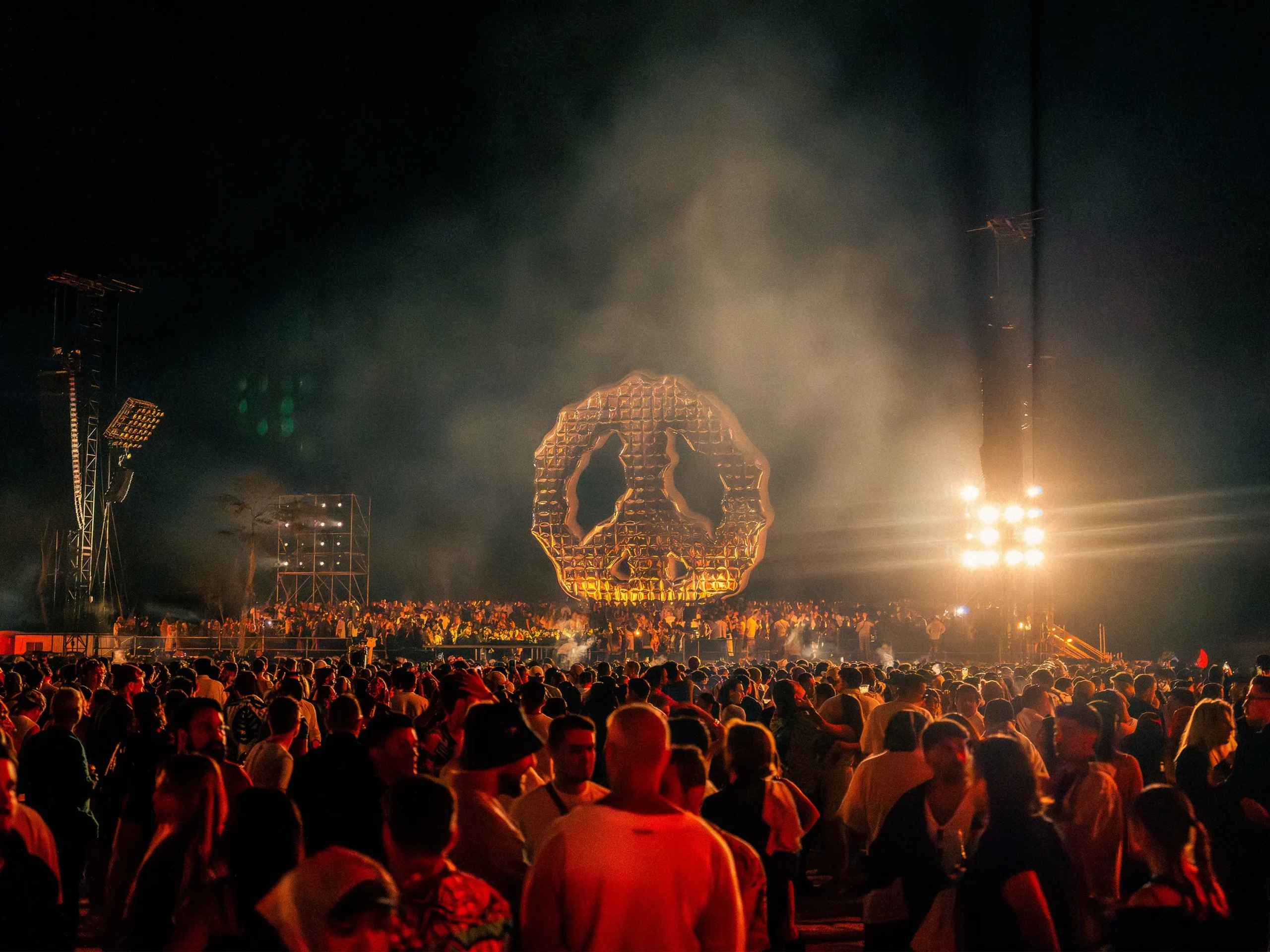
If you are going, go rested. A practical guide to Tulum's festival nights from the hotel that has to wake you the next day.
Nothing filed under that mood yet. Try another.
What the coast is actually doing this month — updated by the team on the first of every month.
29°
Celsius. The warmest water of the year — you won't flinch going in.
6:40
Coffee is on from 5:40. The terraces face it directly.
Mamey
Also pitaya, chaya and whatever the boats bring in that morning.
5pm
Most afternoons, briefly, and then the light turns gold.
September is green, quiet and cheap, and it is also hurricane season. We watch the forecasts daily and we will always tell you straight if something is coming — before you pack, not after you land.
“We have three nights. Is that enough to see anything, or should we just stay put?”
Stay put. Genuinely.
Three nights in Tulum split between Cobá, Sian Ka'an and two cenotes is four hours a day in a van, and you'll go home more tired than you came. We'd give you one morning out — leave at seven, be back by one — and let the rest of it be slow.
If you want the one morning to count: Cobá early, before the heat, then a cenote on the way back. That's it. The beach does the rest, and the sunsets here don't require a reservation.
Beachfront suites with private plunge pools, a kitchen led by Chef Olga Mendoza, and the five-thirty light.
Book your stayNobody books a room for the twenty minutes before sunrise. Ask our night team, though — the two people who hand the hotel over to the morning — and that's the part they'd keep.
At around half past five the sky over the reef stops being black. It turns a colour that doesn't quite have a name: grey with something warm underneath it, like a coal you can't see yet. The palms go still. And the sea, for a short while, is flatter than at any other hour, so you stop hearing one long sound and start hearing individual waves arrive.
By 5:40 the first pot of coffee is on. That isn't hospitality theatre. The kitchen has always started around then, and somewhere along the way guests began appearing in robes, saying almost nothing, taking a cup and walking down to the sand. So we started making more of it.
You stop hearing one long sound and start hearing individual waves arrive.
The frigate birds go first — high, unhurried, always before the light. Then the pelicans, much lower, working the line where the water changes colour. If there were fishing boats out overnight you'll see them come back in around six, and if you're lucky you'll see them pass close enough to wave.
The light itself moves faster than people expect. There's a moment, maybe ninety seconds long, when everything — the water, the palapa roofs, the white walls of the suites — goes the colour of the inside of a shell. Then the sun clears the horizon properly and it's simply a beautiful morning like any other.
You don't need to organise anything. There's no sign-up, no guide, no special breakfast. Set an alarm for 5:20, put on whatever is nearest, and take the stairs down.
Ask the night team the evening before and they'll leave a thermos and two cups outside your door, plus a folded blanket — it's warm, but at that hour there's a breeze off the water and people always underestimate it. The best seats aren't on the beach; they're on the second-floor terraces, where you're above the palms and can see the light arrive across the whole bay at once.
Go back to bed afterwards. Almost everyone does. Breakfast isn't going anywhere.
It's the question we're asked more than any other, usually in a slightly apologetic tone, as though it were rude to bring up. It isn't. You're about to spend money on a beach. You should know what the beach is doing.
Sargassum is a floating brown seaweed. It's been in the Atlantic forever, but since around 2011 far more of it has been drifting west into the Caribbean. It isn't pollution and it isn't dangerous — out in the water it's a whole nursery of small fish and turtles. On the sand, once it's been in the sun a day or two, it darkens and smells of sulphur. That's the part nobody enjoys.
Broadly: it's a spring and summer story. April through August is the window where it's most likely, with May, June and July usually the heaviest. September and October can still get patches. From roughly November to March the coast is at its cleanest, and that's also when the water is clearest.
But it moves with wind and current, not with the calendar. We've had a spotless June and a messy October. Two hotels four kilometres apart can have completely different mornings.
It moves with wind and current, not with the calendar.
The beach is cleaned by hand every morning before breakfast, and again through the day when there's a lot of it. We don't use heavy machinery — it compacts the sand and takes the turtle nests with it. In high season we run a barrier offshore when conditions make it worth it.
What we can't do is promise you a photograph. Anyone who promises that is guessing.
Book between late November and early April. The water is clear, the air is dry, the sunsets are long, and the whole coast is at its best. If your dates are in the summer window and the beach has a heavy morning, tell reception — the plunge pools, the cenotes an hour inland and the reef at Akumal are all completely unaffected, and we'll rearrange your day in about five minutes.
We'd rather you arrive knowing than arrive disappointed.
There's a dish on our menu that photographs badly and eats brilliantly, which Chef Olga Mendoza thinks is the correct way round.
It's fish — whatever came in that morning — set on a dark bed of black beans cooked down for hours with avocado leaf, with almost nothing on top. No foam, no smear, no tower. Guests order it, look at it for a second, and then go very quiet.
“People think you decide the menu and then buy the ingredients,” she says. “Here it's backwards. I see what the boats have. Then I decide.”
That's why the fish on the plate changes. Some weeks it's grouper, some weeks snapper, occasionally something we have to look up. The bean base doesn't change, because it's the part that takes patience: soaked overnight, then a slow afternoon with garlic, onion and a few avocado leaves, which give it a faint anise note that most people can't identify and everyone notices.
People think you decide the menu and then buy the ingredients. Here it's backwards.
Because the ingredients are good enough that anything else would be hiding them. This is not a humble position — it's a demanding one. A plain plate has nowhere to put a mistake.
The seasoning is salt, lime, a little chilli oil and time. The fish is cooked skin-down and not moved. The only garnish is whatever herb is doing well in the garden that week.
You won't get our fish, but you can get most of the way there with the beans. Soak black beans overnight. Cook them low with half an onion, two garlic cloves and, if you can find them, two dried avocado leaves — Mexican grocers have them, and nothing else substitutes. Salt only at the end. Blend half, leave half whole. That texture, half-silk and half-not, is the whole trick.
Ask for a table after eight. The beach cools, the kitchen has found its rhythm, and Chef Olga usually comes out between services — if the dish you're eating came from a good morning at the dock, she'll tell you about it in some detail.
The whole peninsula is limestone, which is to say it's a sponge. There are no rivers on the surface here; the water runs underneath, through thousands of kilometres of flooded cave. Where the roof of one of those caves has collapsed, you get a cenote — a window into the underground river.
The Maya considered them entrances. Once you've swum in one at nine in the morning, with the light coming down in a single column and the sound of your own breathing coming back at you off the stone, the word stops feeling like a metaphor.
Cenote Cristalino — about forty minutes north. Half open, half cave, with a ledge to jump from that everyone under thirty finds within four seconds. Go at opening or don't go.
Gran Cenote — a few minutes out of town and the most beautiful of the easy ones. Turtles, stalactites, a swimming line straight through a cave. It is also the busiest by a distance. Be there when it opens or accept that you're sharing it.
Cenote Zacil-Ha — small, shallow, unglamorous, and almost always calm. It's where we send people who want to read a book in the water rather than photograph themselves in it.
Cenote Calavera — three holes in the ground and a ladder. No handrails, no cafe, nothing curated. If you want the version that feels like a discovery, this is it.
Where the roof of one of those caves has collapsed, you get a window into the underground river.
Cenotes close, flood, change owners and change prices without announcing any of it. Before you set out, ask at the desk — we check what's actually open that week, and we can usually tell you which one had a coach party booked in that morning.
Go early. Take less than you think. Say less than you normally would.
Doing nothing is a skill, and like most skills it goes badly the first time. People arrive, lie down, last eleven minutes, and reach for a phone. So we stopped leaving it to chance and built an afternoon that carries you through it.
Around three. Start in your own plunge pool, not the spa. Heated, private, quiet. Twenty minutes, no music. This is the part that decides whether the rest works, because it's where the day drains out of your shoulders.
Around four. The sauna, and then cold water, and then the sauna again. Two rounds is plenty. If you've never done contrast bathing, the second cold plunge is the one where something in your chest unlocks.
Around five. The temazcal. This is the one people come back for.
It's a low dome, volcanic stones heated outside and brought in glowing, and water poured over them with aromatic citrus herbs. It is hot, it is dark, and it is a ceremony rather than a sauna — there's a rhythm to it, four rounds, and it lasts about an hour.
You can leave at any point. Nobody will think anything of it, and it isn't a test. Most people who leave in the second round come back the following day and stay for all four.
The second cold plunge is the one where something in your chest unlocks.
Around six-thirty. Do not book dinner. Don't plan anything at all. Go back to the room, lie down, and let the evening take whatever shape it takes. Roughly half of our guests fall asleep here, which is the correct outcome and not a wasted evening.
The temazcal runs on set days and takes a small group, so ask on arrival rather than the morning of. Drink more water than feels necessary beforehand. And skip it on a day you've been drinking or have been out in strong sun — it's a lot for the body, and it's much better rested.
Somewhere in the last decade mezcal got solemn. People started swirling it, holding it up to the light, and using the word “terroir” before they'd had any. You are welcome to do all of that. You're also welcome to just drink it.
Agave is a plant that takes between six and thirty years to be ready. Tequila is made from one species, blue agave, mostly in Jalisco, and it's usually steamed. Mezcal can be made from dozens of species, mostly in Oaxaca, and the hearts are roasted in a pit in the ground — which is where the smoke comes from. That's it. That's the difference.
All tequila is, broadly, a mezcal. Not all mezcal is tequila. That is the only piece of trivia you need.
Room temperature, no ice, in a wide glass. Don't shoot it — nobody in Oaxaca does. Take a very small sip, let it sit, breathe out through your mouth afterwards. The first sip will taste mostly of heat; the second is the one that actually tells you anything. Salt and orange are traditional and they're not a beginner's crutch.
If it burns more than it tastes, it's either too cold or too fast.
For someone who says they don't like mezcal. An espadín with grapefruit and a pinch of sea salt. It's a paloma wearing a different coat, and it has converted more people than anything else we pour.
For someone who does. A tobalá, neat, nothing else. Tobalá is a wild agave that takes over a decade and yields very little, so it's never cheap — and it tastes like green fruit and wet stone rather than smoke.
For the end of the night. Mezcal, fresh lime, a spoon of local honey, a little chilli on the rim. It shouldn't work as well as it does.
The bar is best between seven and eight, when the light goes orange and there's time to talk. Tell whoever's pouring what you normally drink at home — gin, whisky, nothing at all — and they'll find the agave that maps onto it. That's a better route in than any menu.
We used to close breakfast at half past ten, like everyone else. Then we watched what it did: a ripple of people checking watches at ten past, a small rush, and a dining room that emptied like a bell had gone off in a school.
So we stopped. Breakfast now runs until noon, and the difference in the room is remarkable.
Couples stay at the table. Plates get ordered in a second round — not more food, just a second coffee and something small to go with the conversation. People come down from a swim in a robe at eleven and nobody blinks. The room is quieter and fuller at the same time, which shouldn't be possible.
The room got quieter and fuller at the same time, which shouldn't be possible.
The eggs benedict are the most ordered thing we make, and they're made properly: hollandaise to order, no holding tray, which is why they occasionally take twelve minutes. The waffles come with whatever fruit is best that week — in September, mamey and pitaya, which look painted on.
There's also a quieter menu that doesn't get photographed as much and is what most of the staff eat: chilaquiles, eggs with chaya from the garden, black beans, good tortillas, and a jar of green salsa that will wake you up faster than the coffee.
Order both. It's the only meal of the day where nobody judges you for it.
The two tables at the seaward corner catch the breeze and the sound of the water without the direct sun — from about half past eight they're the best seats in the hotel. They aren't reservable. They go to whoever comes down first, which is a small, fair injustice we've decided to keep.
Here is the honest pitch: you will not be the most flexible person in the garden. You may well be the least. Nobody is looking at you. Half of them have their eyes shut and the other half are worrying about exactly the same thing.
Because of the temperature, mostly. By eight the sun is over the palms and a sun salutation becomes an act of endurance. At six it's about twenty-four degrees, the air is still heavy with night, and the light comes in sideways through the plants.
And because of the sound. There's no music. There's the sea, a long way off, and birds, and at some point the first delivery van on the beach road, which everyone finds funny.
At six the air is still heavy with night and the light comes in sideways through the plants.
Sixty minutes, slow, on mats in the garden. It's a hatha and vinyasa mix that stays gentle — this is not a class designed to test you, it's a class designed to make the rest of your day feel different. The last ten minutes are on your back doing nothing, and that's not padding. That's the bit.
Everything is provided: mat, block, strap, cold towel at the end. Come in whatever you'd sleep in. Don't eat first.
Make it the morning after you arrive, before the holiday has decided what shape it's going to be. It resets the clock, gets you on local time, and — practically — means you're awake for breakfast in the good corner. Ask at the desk the night before; it's small on purpose.
And if you sleep through it, sleep through it. That counts as wellness too.
Housekeeping sees every suitcase in the building, which makes them the only people qualified to write this. Their summary, roughly: everyone brings twice the clothes and half the useful things.
Reef-safe sunscreen. Mineral, zinc or titanium based. Regular sunscreen isn't allowed at the cenotes and is restricted in the Sian Ka'an reserve, and it's genuinely bad for the reef. You can buy it here, but it costs roughly three times what it costs at home.
Cash in pesos. Small notes. The beach road runs on cash — the cenote gates, the taco place you'll end up loving, the man selling coconuts. Take it out at a bank ATM in town, never at a standalone machine on the beach road.
One pair of shoes you can walk in. Not sandals. The jungle paths, the ruins and the cenote steps are stone, root and mud, and every year someone does Cobá in flip-flops and regrets it audibly.
Everyone brings twice the clothes and half the useful things.
The hairdryer, the travel iron, the beach towel, the second pair of heels — sand and heels have never once worked. Also the formalwear: there is no dress code here, at any meal, ever. Linen and bare feet is the local uniform and it is entirely correct.
Robes, slippers, beach towels, aromatherapy, alkaline water, hairdryer, and umbrellas for the September afternoons. If you've forgotten something small — a charger, a toothbrush, a razor, a sewing kit — call the desk before you go out and buy one. We almost certainly have it.
A private table on the beach is the most requested thing we do, and also the one people have the most wrong ideas about. So here's how it actually works, unromantically, so that the evening itself can be the romantic part.
We set you down about forty minutes before sunset. That's deliberate — you get the light, then the colour after the light, which lasts longer and is better, and then the dark with the lanterns. Sitting down at full sunset sounds right and isn't; you spend the first course squinting.
In September that means around half past six. In February, closer to five-thirty. The desk will give you the exact time when you book.
This is the variable nobody thinks about. Most evenings there's a light breeze off the water, which is lovely. Perhaps one evening in ten it's strong enough to take a napkin and make a candle pointless. When that happens we move you to the terrace above the sand — same menu, same service, same view, twelve feet higher.
We'd rather move you than watch you have a beautiful, windy, slightly irritating dinner.
You get the light, then the colour after the light — which lasts longer and is better.
Because everything on it is bought for you specifically. Chef Olga builds the courses around what's landing that week and around whatever you've told us — allergies, things you don't eat, the fact that one of you doesn't really like fish and has been too polite to say. Two days is what the market needs.
It also means the kitchen isn't cooking your dinner in the middle of service. It's cooking it around service, which is why it arrives at the pace of a conversation rather than the pace of a restaurant.
Tell us if it's an occasion — we won't do anything embarrassing, but there will be a small thing at the end. Bring a light layer; the sand gives up its heat quickly after dark. And leave the phone in the room. We'll take two photographs at the start and then nobody will come near you again until you look up.
Tulum has two personalities and they don't always speak to each other. There's the one on the beach at six in the morning, and there's the one in the jungle at three. Both are real. If you're here for the second, we'd like you to enjoy it and still have a holiday left afterwards.
Zamna is a festival held in the jungle north of town — stages built into the trees and among cenotes, running mostly from late autumn through winter. The sound is house and melodic techno, the crowd is international, and the setting is genuinely unlike anywhere else: you're dancing in a clearing with roots underfoot and stars through the canopy.
Nights typically start late, around ten or eleven, and finish when they finish.
You're dancing in a clearing with roots underfoot and stars through the canopy.
Breakfast runs until noon, which we did not design for this reason but which turns out to be extremely useful. Order the chilaquiles and the green salsa. Then the plunge pool, cold, and an hour flat on the bed with the ceiling fan on.
Tell the desk your dates and we'll tell you what's on while you're here — Zamna and the other jungle venues publish late and change often. We can usually sort tickets, a driver, and a late checkout on the right day, which is the one people forget to ask for.
Go out. Come back. Sleep it off by the sea. That's the correct order.
Beachfront suites with private plunge pools, twenty minutes from the ruins and five from the sand.
Check availability